For my third film in MIFFEST this year, I picked one of Lee Chang-dong’s masterpieces called Peppermint Candy!
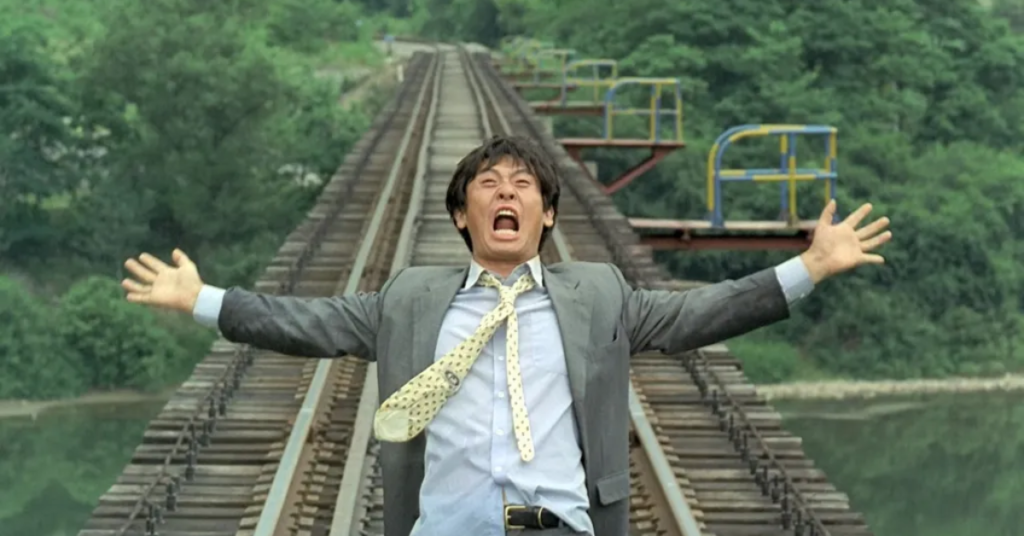
Why? It was a no-brainer actually, this is Lee’s second ever feature that he directed that in a way sent him into a much larger audience globally. Released in 1999, this film follows a man named Yongho, who shortly after showing up at his 20 years reunion picnic with his friends, he decided to take his life on a railway. This film progresses in reverse as we go back into 6 chapters of his life until 20 years back, that led to his decision of taking his own life. Directed and written by Lee Chang-dong, and starred Korean cinema powerhouses, such as Sul Kyung-gu, Moon So-ri, Kim Yeo-jin, Lee Dae-yeon, and many more.
It can be a bit difficult sometimes, to judge and analyze a film in an organic and unbiased way, when you already know or even love the people behind it. But this film, lived up to his big names, and popularity. It was one of those films that was so popular, it can make you feel a bit hesitant to check it out, but then you did it and you couldn’t be happier to be wrong.
The main character, Yongho, played by Sul Kyung-gu, along with the other characters, are written in a very human way. In a way that can make you hate them, love them, then despise them, then over time, you find yourself in a place where you can also understand them, or relate to them in a certain way. Like all of Lee Chang-dong’s films, it’s not going to be a black and white story, and never will be. His films, including this one, is more so of a journey about someone, rather than a definition, an ending, or a culmination. You will walk out of the theatre asking questions and thoughts rather then getting fed by answers.
A plus moment of this screening is that after the film screened, we had a short but lovely Q&A session with the man on the helm himself, Mr. Lee Chang-dong, who informed us that at the time, he had just arrived in Malaysia about 3 hours ago. The two main points that I noted from the session is one, when someone asked him about his process of writing the dialogues in this film, he said that he only let it be as natural as possible. He didn’t have any special formulas or formats, he was just trying to be as real and honest as he could be when writing them, showing that these characters are actually more common out there in real life that we might thought of. He said that he could get inspiration from just people that he knows of or basically everything that he sees, hears, or experiences, could be ideas of his work.
The second one, when asked about what did he think are the kind of questions that people might have of this film and what would be the answers, he mentioned that he won’t get too caught up about things like that. He prefers his work to be something that people can interpret it in their own personal ways, and ask questions based on their own feelings and emotions, and try to get the answers based on their own understandings and connection to the film when we were watching it. Overall, it was a great session with him, and I appreciated his time, to stay and talked to us for a bit. Loved the film, loved the experience!